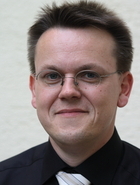
Since September 2009 I’ve been working as a teacher – after almost ten years as editor-in-chief of a Linux magazine. The subjects I teach are maths and computer science, and this year CS means object-oriented programming. The school offers Windows machines only, so I’m stuck with that platform.
However, when I tought an Introduction to CS course at Munich University of Applied Sciences about 1.5 years ago, I opted for Excel macro programming (VBA) instead of the also available OpenOffice macro language, and I actually liked what I saw there, and now I can recycle some of my lecture concepts in my school lessons.
Why would I, being a Linux enthusiast, choose Microsoft’s macro language over the open source OpenOffice macro language? VBA is much more accessible for programming newbies. While the languages themselves are pretty similar dialects of Basic, the object model that OpenOffice uses to access document content requires very profound insights and cannot be explained in a few hours. (Try to do something with the current selection in Excel and in OOo Calc to see what I mean.) The VBA object model for Excel documents might be flawed in comparison (as many people like to point out), but it’s fairly easy to understand, and when teaching VBA, I can get pupils to write useful macros in a few hours.
There is certainly a long list of things that I prefer in OpenOffice (think of the terrible new GUI for Microsoft Office, think of easy PDF export in OOo), but the macro language isn’t one of them.
Are there any (free/open source) object-oriented languages out there that you would suggest to use for teaching programming to school pupils aged 17 with no prior programming experience? I’d like to switch to something different next year.
This is a translation of my editorial in EasyLinux 03/2009 (link to german version).
Why Linux?
Printer, scanners, and TV cards which do not function at all; popular Windows programs which will never run, except in an emulation with complete virtual Windows installation; configuration tools that differ immensely from distribution to distribution and slightly from version to version; incompatible package formats that make software installation a game of chance, even for native apps — these are criticisms often found in internet forums about questions and problems of new Linux users.
The alternative: using the “standard” operating system that supports all devices, all important programs, and that typically across many OS versions. Installing a Windows program from 1995 on a Vista machine? Likely to be successful. OK, driver availability for a ‘95 scanner on Vista isn’t good either, but at least today’s equipment from your local discounter will work.
Read more…
Today I was wondering whether there’s a genre that could be called SciFi-Fantasy. To use the stereotypes, there would be wizard and elf like characters using modern (or more advanced) technology, flying spacecrafts or travelling through mysterious stargates between worlds… Demons installing daemons in the server room, and god-like super-powerful deities posting videocasts for their “followers”.
Traditionally wizards & Co. always appear in sort-of-ancient settings without any technology. But combining the power of yet-to-be-developed tech stuff and fantastic abilities might make for interesting stories, if e.g. your programming wizard in the office is in fact a master computer programmer and a wizard who operates the machines but occasionally drops an incantation when one of his programs breaks
If you are aware of such literature, please drop me a note — I’d like to read something along those lines.
Ah, the latest book in the series by Kim Harrison about the witch Rachel Morgan and her vampire colleague and friend Ivy Tamwood has become available in Germany (as paperback). This time they are trying to find the murderer of their friend Kisten. I only started reading the book yesterday, but so far it looks promising; I already had a few good laughs.
This is a translation of my editorial in EasyLinux 02/2009 (link to german version).
Help! The Ribbons are coming
The Ribbons are coming. That isn’t father and mother Ribbon with their dodgy son Frank Ribbon who terrorizes the neighborhood — no, the Ribbons are worse: They are little revolutionaries wanting to change the whole world and attack people’s habits… at least, as far as software usage is concerned.
Ribbons are a Microsoft invention and users of the latest MS Office already know them: Gone are the times of navigating through multi-level menus, instead there are many beautiful and context-dependent icons for the program functions that make sense at a given time.
Read more…
Over the last years all major Linux distributions have made “Xinerama” mode the standard for dual- or multi-head display setup, that is: When you have two or more screens, the system treats them as one big display where you can move windows from one monitor to another or even place them “in between”.
That’s precisely what Windows (and Mac OS X) do when you attach more than one monitor, but I prefer the traditional Unix way of creating distinct desktops (on Linux you’ll then call them :0.0 and :0.1 and may even run different window managers or desktops on the separate screens).
However, with the move to Xinerama mode, it has become harder to setup a classical multi-head environment. Some examples: KDE 4 won’t start on two non-Xinerama screens, just ignoring the second monitor. The latest KDE 3 versions also have problems, and when using the “focus follows mouse” behavior for activating windows, weird stuff happens – focus will move to the other monitor when switching virtual desktops (with Ctrl-F1, Ctrl-F2 etc.).
Who’s still using the classical multi-head with separate screens? Any suggestions for making the KDEs work properly with a recent Linux distro? Comments highly welcome…
Every couple years I hear that Linux World Domination is coming “real soon now”, or at least a recognizable market share for Linux on the desktop or something like that. For example, when Windows Vista appeared, people talked about migrations from XP to Linux for performance and licence reasons, but nothing much happened. The latest idea was that netbooks will pave the way for broad Linux adoption. OK, I am using Linux on a netbook right now, and I think it’s perfect for these small computers. But then, I’ve been using Linux for about 15 years, and I run it on all machines. The pre-installed Windows XP on the netbook was usable, but I found I could not use the small screen very well with a start bar and regular window frames; my Linux distribution (EasyPeasy, a modified Ubuntu) makes better use of the 1024 x 600 screen. Apparently Vista doesn’t run well on the low-fi netbook platform, and Windows 7 might improve this a bit; haven’t tested that.
Read more…
Do you know Sergei Lukyanenko? The german spelling of the (russian) name is Lukianenko (Лукьяненко), and in Germany he’s becoming more and more popular, at least as far as the local book store is concerned where I get my books.
Lukyanenko has, besides several other books, written a series of four books beginning with “Night Watch“. The world is populated not just with normal humans, but also with “Others”, and they are divided into two sides, the Light ones and the Dark ones. (Anyone thinking of elves and dark elves?) They can enter a place called Twilight that looks like a twisted version of the normal world and it turns out there are several layers of this Twilight. The story doesn’t play in a classical fantasy world, but in modern Russia, and the Others live normal lives, as far as these can be called normal, considering their special abilities. You get vampires, but they are also different from vampires as seen in other stories. The two sides have two organizations, called the “Night Watch” (consisting of Light Others who watch over the Dark ones) and the “Day Watch” (with things the other way round). Life is governed by the Great Contract that all Others have to respect. So the “good” can’t do as much good as they’d like, and the same holds for the “bad”.
I read all four books in short sequence and found them great, from the first to the last page. The characters are well-developed and interesting, and the whole setup is just fascinating.
While the official series ended with the fourth book, there’s a sequel written by one of Lukyanenko’s co-authors, Vladimir Vasilyev (Wladimir Wassilijew, Владимир Васильев) that introduces a third side (to the Light and the Dark) and which was also great to read. (It seems the book hasn’t yet been published in English – following the author’s en.wikipedia.org entry it might be called “Face of the Dark Palmira”. The german title is “Bewahrer des Chaos”, published April 2009.) Hoping for more 
Ok, after using Blosxom for a few years, I wanted to try out a “true” blog – so here it is, powered by Wordpress. Installation was simple so far, let’s see where this will lead. There’s a world of a difference between writing new posts in the vi editor and using the wysiwyg editor of Wordpress. While it’s nice to have an editor that behaves like a text processor, I’ve certainly been a bit faster with the simple one. But then, with WordPress you can have feedback which isn’t possible with Blosxom.